
My Argentine mother-in-law stopped me in the hallway to give me a drying rack and a package of new sponges. We had been staying with her and my father-in-law for about a week as we waited to move into our new house. As move-in day approached, the gifted pile of items grew into a crate with extra dish soap, sheets, toilet paper, and washcloths. She wanted to make sure we weren’t without the essentials when we arrived at our new place.
I recognized her actions because my Filipina mother does the very same thing every time I visit her house. Even if we’re only there for a day, I always leave with extra paper towels because she bought a 20-pack at Sam’s Club, or a prayer card she got in the mail, or a bag of chips or cookies or extra fruits and vegetables that are going to go bad if no one eats them.
“The children might get hungry,” she says. “I don’t need all of this.”
Sometimes I hesitate to take things because of my minimalist tendencies, but I can’t refuse because I understand and appreciate the sentiment behind them. I imagine it’s the same regardless of culture – Italian, Jewish, Korean, Ugandan, or Honduran mothers. I imagine they all carry this need to give, to prepare, to pack a little something for their children to take with them on the journey.
I am an American mother and I do this even though my kids still live in my house. One of them started high school in the fall and the other one middle school. And while they typically pack their own backpacks now, I still find myself making sure they have their glasses or gum, tissues for the one who sneezes, a book for the one who likes to read when he has free time, a protein bar for the one who has swim practice after school.
These little things act as reminders. “This is for you for when I am not with you.”
Last year, I had the opportunity to hear Dr. Tiya Miles, author of All That She Carried: The Journey of Ashley’s Sack, a Black Family Keepsake. She talked about a beautifully special instance of this tradition. Her book is based on an artifact, a sack from the mid-1800s given by an enslaved woman to her daughter who was going to be sold into slavery. She talked about the thoughtfulness and care of each item chosen; a dress, pecans, a braid of her mother’s hair, and most importantly, love.
She writes, “Things become bearers of memory and information, especially when enhanced by stories that expand their capacity to carry meaning.”
I think about my mother-in-law and mother and the journeys their families have taken; my mother-in-law’s family from Germany to Argentina, my mother from the Philippines to the U.S. They have shared some of their stories of starting anew in an unknown land, of times when food and other essentials were scarce.
Over the years the material artifacts of those journeys have gotten lost or used up, but the stories and sentiment remain.
As I accept the drying rack, paper towels, and cookies, I understand that what has been given to me is much more valuable than it appears. The items are seeped in love, as if to say, “This is for you for when I am not with you…because I am with you always.”
It is exactly what we need for our journeys out into the world.
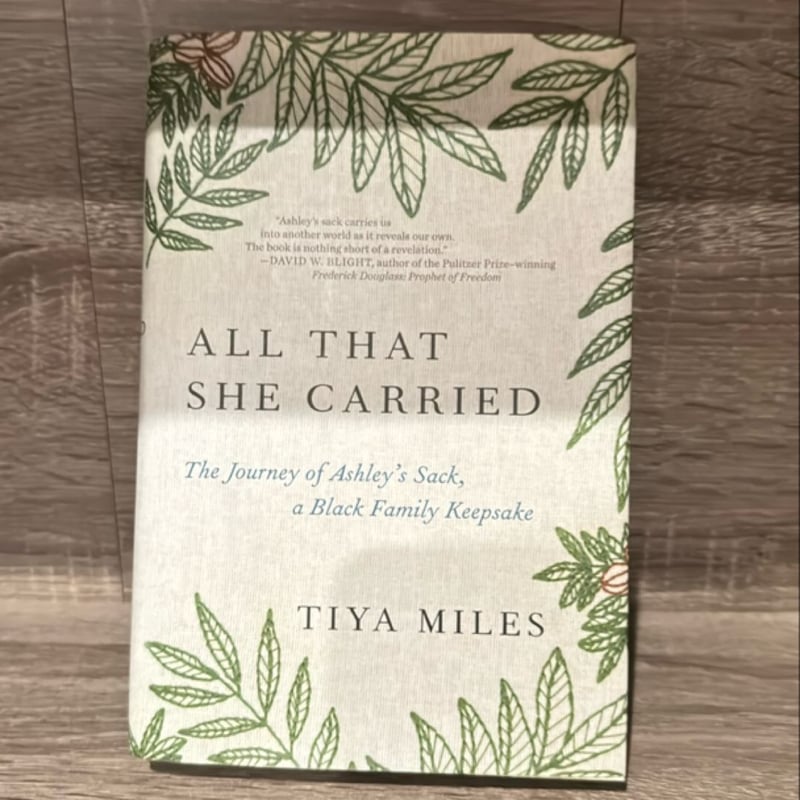
Miles, T. (2024). All that she carried: The journey of Ashley’s sack, a black family keepsake. Profile Books.
That is such a good reminder. These little gifts passed along mean so much more than the thing at face value.